

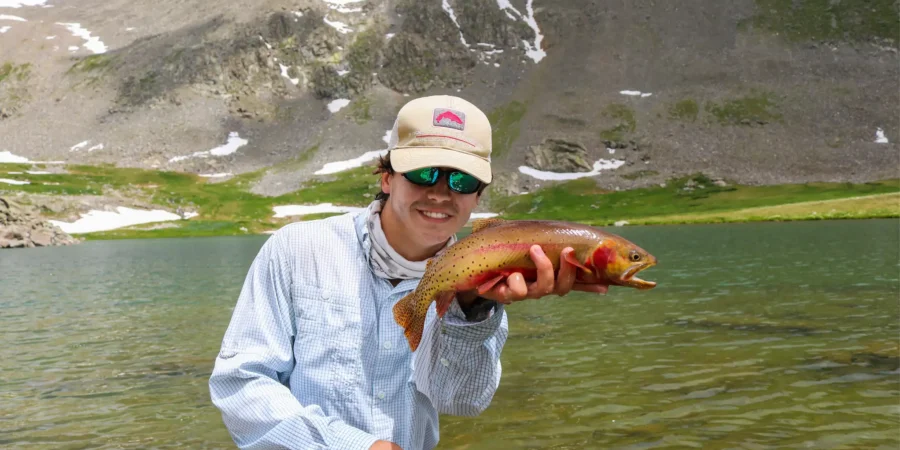
High-Country Horizons: The Ultimate Guide to Fly Fishing Alpine Lakes
Fly fishing a mountain lake offers an experience that rivers rarely can match. High above the tree line, you will find pristine water, wild trout, and a profound sense of solitude. However, these beautiful stillwaters require a complete shift in strategy. Without a steady river current to deliver food, finding fish and choosing the right presentation demands a different set of skills.
Reading the Stillwater: Where the Fish Live
In a river, trout hold in eddies and behind rocks to save energy. In a mountain lake, trout are constant cruisers. Because they must search for their food, they follow predictable underwater pathways.
To find success, focus your efforts on these three key structural areas:
- The Drop-Off: This is the absolute best place to start. Look for transition zones where shallow shoreline flats suddenly plunge into deep, dark water. Trout patrol these edges. They use the deep water for safety and dart up into the shallows to seize insects.
- Inlets and Outlets: Moving water brings life to a lake. Incoming streams deliver oxygen, cooler temperatures, and a steady conveyor belt of bugs. Outlets funnel floating insects into a tight space. Always spend time casting where water enters or exits the lake.
- Wind Lanes: Do not curse the mountain breeze. Wind acts as a natural funnel, trapping terrestrial insects on the lake surface and concentrating them into distinct lines of foam. Trout will line up underneath these foam lanes for an easy feast.
The Backcountry Fly Box
High-altitude trout endure short summers and long winters. This brief growing season makes them opportunistic feeders rather than picky eaters. Instead of carrying thousands of patterns, you only need a few versatile essentials.
Terrestrials are incredibly effective in the high country. Because mountain lakes are surrounded by meadows and forests, land-bound bugs frequently blow into the water. A foam ant or beetle pattern cast right against a breezy bank is often irresistible to cruising fish.
When fish are not feeding on the surface, a dry-dropper rig is highly efficient. Tie on a high-floating dry fly, such as bigfishmccall.com an Elk Hair Caddis, and hang a small Pheasant Tail or Hare’s Ear nymph two to three feet below it. If bright afternoon sun drives the fish deep, switch to a weighted Woolly Bugger or a balanced leech. Cast it toward a drop-off, let it sink, and retrieve it with an erratic strip-and-pause motion.
Three Technical Rules for Alpine Success
First, you must master the art of stealth. Because alpine water is exceptionally clear, trout can easily see your silhouette against the sky long before you see them. Stay low, move slowly, and stand a few steps back from the water’s edge.
Second, practice your roll cast. High-country shorelines are often choked with thick willows, pine trees, and granite boulders. When you have zero room for a traditional backcast, a clean roll cast will keep your fly out of the trees and in the strike zone.
Finally, embrace patience. Unlike river fishing where you cast repeatedly to the same pocket of water, stillwater fishing is a game of anticipation. Find a promising drop-off lane, make a clean presentation, and wait for the cruising trout to find your fly.

Leave a Reply