

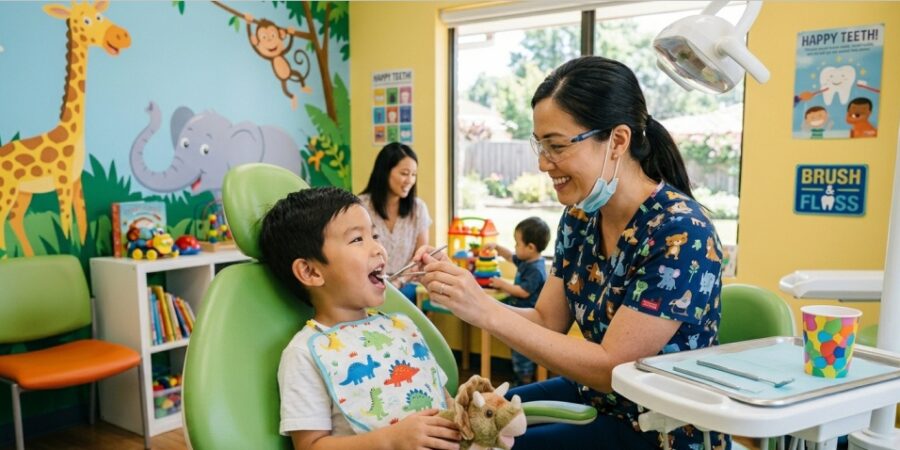
In Malaysia, only qualified paediatric dentists and specialist anaesthesiologists are legally permitted to administer deep sedation and general anaesthesia (GA) to children. General dental practitioners can offer mild sedation like nitrous oxide, provided they have the correct equipment and training. Always verify a practitioner’s credentials before allowing them to sedate your child.
Taking a child to the dentist can cause significant anxiety for both the child and the parent. When a child requires extensive dental work or struggles with severe dental phobia, sedation often becomes necessary to ensure the treatment is completed safely. Finding a qualified pediatric dentist is the crucial first step in this process. However, many parents remain unaware that administering sedation to children requires highly specific medical certifications.
The safety of your child depends entirely on the expertise of the person administering the sedative. Children respond to medications differently than adults, and their airways are much smaller and more vulnerable during medical procedures. A minor miscalculation can lead to severe complications.
This post explains the rules surrounding paediatric dental sedation in Malaysia. You will learn about the different levels of sedation available, identify exactly which medical professionals can legally perform these procedures, and discover how to spot potential red flags before booking an appointment.
What are the different levels of dental sedation for children?
Dental sedation is not a single, uniform procedure. Healthcare providers classify sedation into four distinct levels, ranging from mild relaxation to complete unconsciousness.
What is nitrous oxide (laughing gas)?
Nitrous oxide is the mildest form of sedation. The child breathes a mixture of nitrogen and oxygen through a small mask placed over their nose. This gas helps the child relax while remaining fully awake and responsive. Nitrous oxide wears off within minutes after the mask is removed, making it a highly safe option for minor dental procedures.
How does oral sedation work for children?
Oral sedation involves giving the child a liquid medication before the dental procedure begins. This medication makes the child drowsy and deeply relaxed. While the child might fall asleep during the procedure, they can usually be awakened gently. Oral sedation requires careful monitoring because the child’s breathing and heart rate can fluctuate.
What is intravenous (IV) sedation?
Intravenous (IV) sedation delivers medication directly into the child’s bloodstream through a small needle. This method acts quickly and allows the provider to adjust the level of sedation continuously. IV sedation places the child in a state of deep relaxation where they have little to no memory of the dental work.
When is general anaesthesia (GA) necessary?
General anaesthesia (GA) renders the child completely unconscious. They will not feel any pain, hear any sounds, or remember the procedure. Dentists recommend GA for young children requiring extensive, complex dental surgery, or children with special needs who cannot tolerate other forms of sedation. GA requires the use of breathing tubes and continuous monitoring of vital signs.
Which dental professionals are legally allowed to sedate your child in Malaysia?
The laws regulating dental sedation in Malaysia strictly dictate who can administer specific types of sedatives to children.
For mild sedation like nitrous oxide, general dental practitioners (GPs) can administer the gas, provided their clinic is equipped with the correct scavenging systems and emergency resuscitation gear.
However, deep sedation and general anaesthesia carry higher risks. In Malaysia, only a registered paediatric dentist or a medical anaesthesiologist can legally administer general anaesthesia to a child. These specialists have undergone years of additional post-graduate training focused specifically on paediatric airway management and emergency protocols. A standard general dentist is not legally permitted or trained to manage a child under general anaesthesia.
Choose a certified paediatric dentist if your child requires oral sedation, IV sedation, or GA, because these specialists understand the precise pharmacological dosages required for different pediatric age groups and weights.
What are the red flags when choosing a sedation provider for your child?
Parents must remain vigilant when selecting a dental clinic. A major red flag is a general dental practitioner offering oral or IV sedation without possessing specific paediatric emergency training. General dentists may be highly skilled at cleaning teeth and filling cavities, but managing a sedated child’s airway requires advanced medical intervention skills.
Another warning sign is a clinic that lacks dedicated monitoring equipment. If a clinic cannot show you their pulse oximeters, blood pressure monitors, and paediatric-sized emergency oxygen masks, you should decline the treatment. Furthermore, if a dentist dismisses your questions about the risks of sedation or fails to take a comprehensive medical history of your child prior to the procedure, you should seek a second opinion.
How much does paediatric dental sedation cost in Malaysia?
The cost of paediatric dental sedation in Malaysia varies widely depending on the type of sedation used and whether you visit a private clinic or a government hospital.
| Sedation Type | Private Clinic Cost (RM) | Government / Hospital Cost (RM) |
|---|---|---|
| Nitrous oxide | 150 – 300 per visit | Not widely available |
| Oral sedation | 300 – 800 per visit | Limited availability |
| General Anaesthesia | 2,000 – 5,000 | 0 – 50 (waiting list of 6 – 12 months) |
Private clinics offer immediate scheduling but charge significantly more, particularly for day surgeries involving GA. Government hospitals provide heavily subsidised care, but parents must often navigate waiting lists that stretch up to a year.
What essential questions should you ask before agreeing to dental sedation?
Before signing any consent forms for dental sedation, parents should ask the dental provider specific, direct questions.
First, ask: “Who exactly will monitor my child during the sedation?” The person performing the complex dental surgery should not be the same person responsible for monitoring the child’s vital signs. There should be a dedicated professional, such as an anaesthesiologist or trained nurse, watching the monitors at all times.
Second, ask: “What paediatric emergency equipment do you have on-site?” The clinic must have a fully stocked crash cart with emergency medications tailored to children’s dosages, along with a pediatric defibrillator.
Third, ask: “What are your specific qualifications for sedating children?” Do not hesitate to ask for proof of board certification in paediatric dentistry or anaesthesiology.
Taking the next steps for your child’s dental safety
Navigating the world of paediatric dentistry requires careful research and a willingness to ask tough questions. Sedation is a highly effective tool for providing pain-free dental care to children, but it must be respected as a serious medical procedure. By understanding the different levels of sedation and verifying the credentials of your chosen dental provider, you can protect your child from unnecessary risks.
If your child requires extensive dental work, contact the Malaysian Association of Paediatric Dentistry to find a board-certified specialist in your area.
Frequently asked questions about paediatric dental sedation in Malaysia
Is nitrous oxide safe for toddlers?
Yes, nitrous oxide is widely considered safe for toddlers and young children. It is non-invasive, wears off rapidly, and has an excellent safety record when administered by a trained dental professional with the correct equipment.
Can a regular family dentist administer oral sedation to my child?
While some general dentists may offer oral sedation, parents should exercise caution. You should ideally choose a registered paediatric dentist for oral sedation, as they possess advanced training in managing paediatric airways and child-specific medical emergencies.
Why is general anaesthesia so expensive at private dental clinics?
General anaesthesia in a private setting costs between RM 2,000 and RM 5,000 because the fee covers the dental surgeon, a separate specialist anaesthesiologist, the use of a fully equipped operating theatre, and the specialised recovery nursing staff.
What are the main alternatives to dental sedation for children?
Alternatives to sedation include behavioural management techniques, such as tell-show-do, positive reinforcement, and distraction using videos or music. These techniques work well for routine check-ups but may not be sufficient for complex extractions or highly anxious children.

Leave a Reply